What is a hotel conference?
A hotel conference is a planned gathering hosted within a hotel’s meeting facilities where attendees also have access to on-site accommodation and services. It can range from a small training session to a multi-day summit, combining formal sessions with hospitality, catering, and logistics under one roof. For hoteliers, it is a packaged event type that uses both rooms and event space in a coordinated way.
At its core, a hotel conference brings delegates, presenters, sponsors, and organisers into a contained venue where content delivery, networking, and overnight stays happen in the same place. Typical formats include corporate meetings, seminars, roadshows, board retreats, association AGMs, partner kickoffs, and academic symposia.
What makes it distinct from events at standalone centres is the integrated experience. Guests can check in, collect credentials, attend sessions, meet for dinner, and return to their rooms without leaving the property. For organisers, a single venue simplifies scheduling, wayfinding, registration points, and delegate communications.
Scale varies widely. A regional sales meeting might need one main room and a brief coffee service, while a national summit may require a general session, concurrent breakouts, sponsor tables, and evening receptions across multiple days. Hybrid elements are increasingly common, with recording, livestreams, or on-demand access complementing in-person attendance.
From the guest perspective, a good hotel conference feels intuitive. The arrival route is clear, the agenda is easy to follow, and movement between sessions, meals, and bedrooms is simple. From the operator’s perspective, it is an operational bundle that aligns space, services, and guest flow into a single event footprint without overcomplicating day-to-day hotel operations.
Table of contents
Why are hotel conferences important?
Hotel conferences create steady, high-value bookings by combining event space, accommodation, and catering into one integrated revenue stream. They help fill midweek and off-season calendars while strengthening relationships with corporate and association clients who often return year after year. In short, they turn vacant function rooms into a dependable profit centre.
Conferences are one of the few demand sources that can be forecast months in advance. Unlike transient bookings that depend on last-minute leisure trends, conference organisers confirm well ahead, often paying deposits and securing room blocks early. This predictability makes them invaluable for balancing revenue across quieter periods, particularly for hotels in business hubs or secondary cities.
Beyond room nights, conferences generate multiple income layers. Delegates purchase meals, use the bar, book transport, and sometimes extend their stays for leisure—boosting total spend per guest. Catering, equipment hire, and ancillary services such as printing or AV support also contribute to event profitability. A single well-run conference can produce more revenue than dozens of transient guests checking in separately.
For hotel chains or groups, conference business builds brand credibility and strengthens your overall hotel business. When a regional manager books one property and the experience is seamless, they’re likely to roll out future events across other locations in the portfolio. That consistency creates recurring revenue while turning business travellers into repeat guests.
Key takeaways
- Conference bookings provide reliable demand during slower periods. By securing groups months in advance, hotels gain predictable revenue that stabilises occupancy across midweek and off-season gaps.
- Event business multiplies earning potential. Conferences generate spending beyond room nights through catering, bar tabs, and extra services, making them one of the most profitable segments for hotels.
- Corporate partnerships strengthen long-term growth. Delivering a seamless conference experience encourages repeat business and multi-property bookings across your brand, building a dependable revenue pipeline year after year.
Power conference bookings with real-time distribution
Sync rates and availability across every channel and your PMS, surface pricing insights, and keep teams aligned; at one property or across your entire portfolio.
Learn about our platform
What hotel conference facilities should you offer?
When planners assess hotel conference venues, they’re not just looking for a room with chairs and a projector. They want spaces that make events feel professional, welcoming and easy to manage. With that in mind, here are the core facilities that help hotels attract corporates and earn repeat business:
- Versatile meeting spaces: The more adaptable your space, the more events you’ll be able to hold, and the more types of corporate clients you’ll attract. Design flexible rooms where moveable partitions, adjustable lighting and modular furniture allow one space to host keynotes, afternoon breakouts and drinks in the evening.
- Reliable technology: Modern conferences need high-speed Wi-Fi, integrated AV systems, and ideally built-in hybrid capabilities for remote participants. Small details like strategically placed power outlets and on-demand technical support can also make a big difference.
- Food and beverage offerings: You need to ensure your guests don’t go hungry or thirsty. If you don’t make food on-site, you’ll need to form a reliable partnership with a catering company. Dedicated catering areas or pre-function spaces let guests network over coffee or meals without crowding the main room. Menus must be flexible enough to be able to cater to dietary needs.
- Comfort-focused design: Ergonomic seating, natural lighting and acoustics all influence how enjoyable an event feels. Properties that provide an on-site business centre, quick-print options, and nearby guest amenities help conferences run smoothly without last-minute stress.
- Sustainable practices: Sustainability has become a key selection factor. Conference organisers increasingly seek eco-conscious venues that use digital signage, energy-efficient lighting, and local sourcing for food and materials. Industry bodies confirm that offering green options signals professionalism and aligns with corporate environmental goals.
Key takeaways
- Offer flexible, well-equipped spaces. Adaptable rooms and integrated technology let hotels serve a wider range of conference types and group sizes.
- Prioritise service and comfort. Consistent technical support, quality catering, and comfortable design keep delegates engaged and organisers stress-free.
- Lead with sustainability. Energy-efficient operations, digital tools, and locally sourced menus help attract clients with environmental goals while reducing costs over time.
Connect with travel agents worldwide via the GDS
SiteMinder provides seamless connectivity to global distribution system vendors, giving you instant access to travel agents and corporate booking channels worldwide.
Learn More
How can you standardise hotel conference services across multiple properties?
For hotel groups operating multiple properties, consistency is essential to delivering reliable conference experiences that feel seamless for organisers and efficient for staff. Standardising operations also strengthens your brand, and when a customer knows what they’ll get, they’ll give you more business. The following approaches help hotel chains create that consistency across their conference services:
- Shared systems and unified processes: Standardising conference operations across several properties relies on shared templates, centralised booking systems, and unified pricing models. These allow hotels to manage group events efficiently while maintaining brand cohesion from one location to another.
- Clear standard operating procedures: When each property operates independently, conference quality can vary widely. One location might have a strong AV setup, while another venue requires event planners to bring their own. Shared event checklists, preferred supplier agreements and brand-wide service guidelines remove this variability and ensure every property meets the same standards.
- Centralised technology platforms: Technology plays a key role in achieving this consistency. A central platform such as SiteMinder allows hotel groups to manage the accommodation side of conference business across multiple properties. Room rates, availability, and distribution strategies can be updated in real time across your portfolio—ensuring consistent pricing for corporate clients and simplifying revenue management for internal teams.
- Network-wide package development: A shared database of packages helps replicate success across properties. If one hotel develops a well-performing “corporate retreat” package that includes rooms, catering and meeting space, it can be rolled out network-wide while still allowing for local customisation such as regional menus or nearby partner experiences.
- Consistent branding and presentation: Cohesive branding is essential for a seamless organiser experience. Signage, name tags, digital materials, event feedback forms; these all create a consistent presentation that make events feel uniform regardless of the property.
How can you maximise booking & revenue with a hotel event space?
Conference spaces perform best when treated as part of a larger revenue strategy rather than a standalone feature. By bundling accommodation, catering, and experience-based add-ons, hotels can drive higher booking values while keeping their facilities fully utilised year-round. Every element of the event journey, from room rate to refreshments, can become an opportunity to increase yield.
Hotel conference demand trends to plan for
- The global events industry is set to expand by USD 1.07 trillion between 2025 and 2029, driven by increased corporate spending and digital transformation.
- Demand for smaller-scale meetings continues to rise, with 58% of organisers hosting more in-person events under 200 attendees. This shift creates consistent opportunities for hotels with right-sized, flexible spaces.
- Technology-led experiences are shaping corporate events, making digitally supported venues more competitive and attractive to high-value clients.
Packaging room and conference bundles
Bundled packages that combine accommodation, catering, and meeting space create clear value for organisers and simplify sales for your team. Offering a flat per-person rate or tiered options such as “day delegate” or “residential” packages helps clients understand costs upfront. This structure also drives higher average spend by encouraging guests to stay longer and dine on-site.
Flexible space use
Event demand fluctuates, so flexibility maximises occupancy. Convert ballrooms into training centres midweek, or divide large halls into smaller meeting rooms for local businesses. Smaller conferences are on the rise, and hotels that adapt quickly will capture these bookings without leaving valuable space idle.
Loyalty member perks
Encouraging repeat conference organisers through loyalty incentives or discounts can turn one-time bookings into recurring contracts. Offering bonus points for event spend, free upgrades, or discounted AV packages rewards clients for consistency and builds long-term relationships across your brand portfolio.
Partner with local caterers
Local partnerships can reduce overheads while adding authenticity to the event experience. Featuring nearby cafés, restaurants, or suppliers provides a sense of place and supports community businesses. It also opens opportunities for cross-promotion and shared audiences, particularly if those partners promote your hotel as a preferred venue.
Wellness add-ons
Wellness is a growing priority for corporate attendees. Adding morning yoga, spa access, or healthy catering options can elevate your conference packages and appeal to organisers looking to differentiate their events. These small touches often justify premium pricing and improve guest satisfaction.
Team-building activities
Group experiences extend the value of a booking. Coordinate with local operators to offer outdoor adventures, cultural tours, or creative workshops. These activities encourage delegates to extend their stay and increase total on-site spending while creating a memorable impression that drives word-of-mouth referrals.
Key takeaways:
- Treat your event space as a complete product. Bundled packages and flexible use ensure every square metre contributes to revenue.
- Create experiences, not just events. Wellness sessions, team-building, and local collaborations deepen engagement and boost average booking value.
- Invest in technology and loyalty. Digital booking tools and repeat-customer programs make your conference business more predictable and profitable over time.

Pichata Ritchie,
Cluster E-commerce Manager
VALA Hua Hin – Nu Chapter Hotels
FAQs on hotel conferences
How do hotels price conference room bookings?
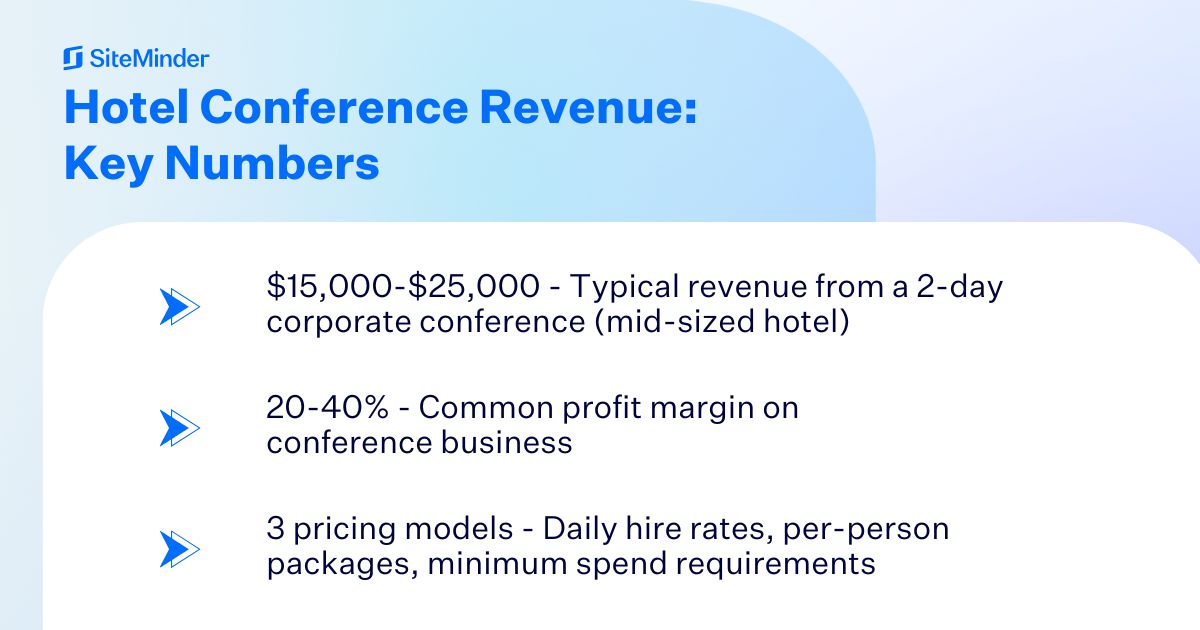
Hotels typically price conference rooms using a combination of daily hire rates, per-person packages, or minimum spend requirements. The structure often depends on the event size, equipment use, and catering needs. Many properties now offer tiered “day delegate” or “residential” rates that simplify planning for organisers while ensuring profitability for the hotel.
What profit margin should hotels aim for on conference bookings?
Profit margins on conference business vary based on size and inclusions, but a 20–40% margin is common when accounting for room hire, F&B, and service costs. Margins can increase when hotels bundle accommodation and catering, since those services typically carry lower overheads and higher mark-ups than venue hire alone.
What’s the average revenue per conference booking for hotels?
Average revenue per conference booking varies significantly depending on the property type, region, and event duration. For mid-sized hotels, a single two-day corporate conference with accommodation and catering can easily generate USD 15,000–25,000, while large city properties hosting multi-day or hybrid events may earn far more. The most successful hotels boost this figure through add-ons like wellness sessions, premium catering, or post-event leisure stays.
How do hotels track and manage conference space usage?
Hotels use property management systems and dedicated event management tools to monitor space utilisation, delegate numbers, and resource allocation. For the accommodation component, platforms like SiteMinder provide unified reporting across properties—helping operators track room bookings tied to conference business and adjust pricing strategies to maximise returns.