What is hotel sales?
Hotel sales is the practice of selling hotel rooms and services to guests. Generally, hotels have dedicated sales teams that focus on implementing tactics to improve hotel room sales and boost revenue.
Whether it’s peak season or off-season, one of the main goals of a hotel should be to develop and execute room selling techniques designed to increase profitability.
Let’s delve into how you can achieve this.
Table of contents
Why is hotel sales important?
The primary reason why hotel room sales is important is because it drives revenue. Increased revenue allows you to deliver the service guests expect and propels your hotel towards future growth. Before you can offer additional packages, excursions, and luxury upgrades, you need to master the art of selling rooms.
Another reason to prioritise hotel room sales is to create the atmosphere guests expect. A nearly empty hotel can be off-putting to guests. By selling as many rooms as possible, you provide a lively, charismatic environment that enhances their stay.
While providing a comfortable stay is a key goal for any hotel sales manager or operator, it’s essential to remember that you’re running a business. This means you need to sell hotel rooms. Your hotel sales strategies should balance your commitment to the guest experience with the necessity of booking as many rooms as possible at any given time.
More sales, less work What if you could boost your hotel's sales and revenue performance while also reducing your workload? Our smart hotel platform helps you do exactly that.
What is the history and development of hotel sales management?
The history and development of hotel sales management is a story of adaptation and innovation, driven by technological advancements, changing consumer behaviours, and the dynamic nature of the global travel and tourism industry.
Early Days: Personal Relationships and Word-of-Mouth
In the early days of the hospitality industry, hotel sales management was primarily based on personal relationships and word-of-mouth referrals. Hoteliers would build relationships with travel agents, tour operators, and corporate travel managers to drive bookings. Word-of-mouth recommendations from satisfied guests were also a crucial source of new business.
The Rise of Global Distribution Systems (GDS)
The 1960s and 1970s saw the advent of Global Distribution Systems (GDS), computerised networks that enabled travel agencies and travel management companies to access hotel inventories and services in real-time. This marked a significant shift in hotel sales management, as it allowed hotels to reach a global audience and significantly increased the efficiency of the booking process.
The Internet Revolution
The rise of the internet in the 1990s and early 2000s brought about another major shift in hotel sales management. With the advent of online travel agencies (OTAs) like Expedia and Booking.com, hotels were able to reach an even wider audience. However, this also led to increased competition and put downward pressure on room rates.
Direct Bookings and the Rise of Metasearch
In response to the growing power of OTAs, many hotels began focusing on driving direct bookings through their own websites. This led to the development of sophisticated booking engines and the rise of metasearch sites like Kayak and Trivago, which aggregate rates from various booking sites, including the hotels’ own websites.
Data-Driven Sales Management
The latest trend in hotel sales management is the use of data analytics to drive decision-making. With the help of advanced data analysis tools, hoteliers can now make more informed decisions about pricing, distribution, and marketing. This allows them to optimise their sales strategies, maximise revenue, and better meet the needs of their guests.

What is a sales funnel?
A sales funnel is a visual representation of the journey potential guests take; from discovering your hotel, to becoming loyal customers. Put simply, it outlines how leads move through various stages before making a booking and, ideally, returning as repeat customers. Understanding the sales funnel definition is essential for hotel operators and marketers because it gives structure to your sales process. It helps you pinpoint where guests lose interest, where they hesitate, and how you can guide them towards finalizing their booking and turning them into loyal customers.
For hotels, the sales funnel is about meeting travellers at every stage of their decision-making journey. By offering the right information, incentives and experiences, you can move them closer to booking. Mastering your hotel’s sales funnel improves conversion rates, increases revenue, and strengthens guest connections.
What are the sales funnel stages & why are they important?
Every sales funnel is made up of different stages that dictate where they’re at in their journey and how you can best appeal to them based on that stage. Every traveller moves through similar steps before they decide to book. Understanding these stages helps you refine your messaging and marketing tactics, guiding you through continuous sales funnel optimisation to ultimately maximise your revenue.
1. Awareness
In this first stage, potential guests discover your hotel. They may have searched for accommodation, seen your property on an OTA, or come across your social media. This is where first impressions matter. Great photos, clear descriptions and positive reviews spark curiosity.
2. Interest
Once aware, guests start to weigh up their options. They will compare your hotel to others based on location, amenities, reviews and price. This is when your website, blog, and social channels should answer their questions and highlight what makes you different.
3. Desire
Now the guest is seriously considering your property. They might sign up for your emails, explore your packages or read guest stories. At this stage, emotional connection becomes important. Show them the experiences they could enjoy and create a sense of urgency with limited-time offers or exclusive perks.
4. Action
This is where interest turns into commitment. The guest is now ready to book, so the process must be easy and inviting. Complicated forms or slow websites could cause hesitation, so you need to ensure that booking is straightforward. You can also consider adding a small incentive such as a free drink or flexible check-in to further entice potential guests.
5. Loyalty
The funnel doesn’t end at booking. Once the guest has stayed, it is time to encourage repeat visits. Follow-up emails, loyalty programmes and thoughtful offers can turn one-time guests into long-term supporters. They may return again or recommend you to others.
Sales funnel example
Imagine a guest planning a family holiday. They begin with a Google search for “family-friendly hotels in Queenstown”. This is the awareness stage. They visit your website and explore your family suites and kids’ activities, moving into the interest stage.
They sign up to your newsletter and receive a special school holiday package. Now they feel connected and reach the desire stage.
They book directly on your website after seeing your best price guarantee, which marks the action stage.
After their stay, you send a thank you email with a 10% return discount and invite them to join your loyalty programme. This completes the journey at the loyalty stage, where they are more likely to come back or refer friends.
Key takeaways
- Understanding funnel stages ensures you tailor unique and effective messaging for each step of the guest journey.
- Smooth transitions between stages remove friction and fall-off, boost guest confidence and increase conversions.
- Strong post-stay engagement turns one-time bookers into loyal repeat guests.
Streamline multi-property operations with SiteMinder’s CRS integrations
We connect your central reservation system with top distribution channels, automatically syncing rates and inventory across all of your properties to lower your cost of distribution.
Learn More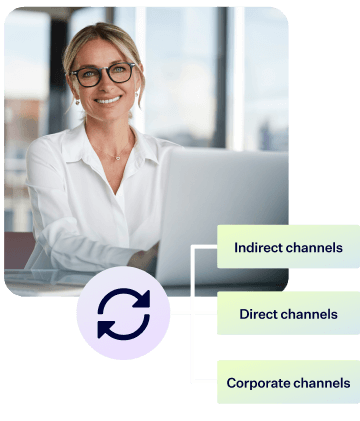
What are the top 13 strategies on how to improve hotel sales?
Every hotelier needs to implement sales strategies that work best for their own target market as well as for their local destination.
Key statistics you should know about:
- OTA dependency impacts profit margins: 77% of European hotel bookings came through OTAs in 2024, with each reservation paying commission to third-party platforms.
- Personalised upselling increases revenue by 20%: McKinsey data shows targeted offers at booking confirmation and check-in consistently lift transaction value.
- Dynamic pricing drives 20% RevPAR growth: Hotels using AI-powered rate optimization capture demand peaks and minimise vacancy during slow periods.
Ultimately, it is up to the hotel operator or manager to create a customised hotel sales solution that will drive the most room sales at their own individual property.
Here are 13 of the best hotel room sales strategies to consider:
1. Group hotel sales strategy
Selling to groups requires a different approach than individual travellers, but land these bookings and you’ll secure high-value revenue with strong repeat potential.
Definition: Selling room blocks and meeting/function spaces to corporate, MICE and event groups via packaged offers.
Benefits: Higher total booking value and repeatable contracts; more predictable occupancy between peaks.
How to implement: List on venue marketplaces and strengthen GDS presence for corporates; create all-in-one packages (rooms + meeting space + AV/catering); build a planner pipeline with fast proposals and post-event re-booking offers.
2. Direct hotel sales strategy
Direct bookings are the most profitable type of reservation you can earn—no commissions eating into your margin, and you own the guest relationship from the start.
Definition: Driving bookings through your own channels (website, phone, email) rather than intermediaries.
Benefits: Lower distribution costs and stronger margin; ownership of guest data for remarketing and loyalty.
How to implement: Invest in an online booking system that syncs with your website and property management system; run direct-only offers (and metasearch if used) to capture high-intent traffic; use email and on-site prompts to steer OTA guests to book direct next time.
3. Destination marketing sales strategy
This is a longer-term play. By teaming up with local tourism operators to promote your region as a whole, you lift overall demand and position your property to capture a share of new visitors.
Definition: Working with tourism bodies and local operators to promote the region and lift overall demand.
Benefits: Bigger top-of-funnel awareness at lower cost; access to new segments aligned to your location’s strengths.
How to implement: Co-fund campaigns with the local DMO and hero seasonal draws; build themed itineraries (families, food & wine, outdoors) with partners; track referred traffic and bookings to double down on high-converting themes.
4. Cross-promotional hotel sales strategy
Major local events bring a surge of visitors who need somewhere to stay. Tie your promotions to these moments and you can fill rooms on dates you’d otherwise struggle with.
Definition: Aligning room promotions with major local events to leverage existing demand.
Benefits: Faster fill on target dates; incremental revenue from event-aligned add-ons.
How to implement: Map the events calendar; set stay restrictions and early-bird tiers; bundle value (transport, early check-in, F&B credits) tied to the event; coordinate content and social with event hashtags and partners.
5. Loyalty program and guest rewards sales strategy
Today’s travellers—particularly millennials—value earning rewards with the businesses they frequent. A well-designed programme turns one-time guests into regulars who book direct.
Definition: Incentivising repeat stays and referrals with perks, points or member-only rates.
Benefits: Higher lifetime value and lower acquisition cost; more direct bookings through member channels.
How to implement: Keep tiers simple; reward stays, spend and referrals; offer member-only benefits (late checkout, upgrades, F&B); automate earn/burn emails and post-stay re-booking nudges.
6. Revenue management sales strategy
The goal here is to maximise the rooms you sell at any point in the year—dropping rates during quiet periods to stimulate demand, and raising them during peaks when guests are willing to pay more.
Definition: Adjusting price and restrictions to demand and pace to maximise revenue and profit.
Benefits: Stronger yield during peaks; reduced vacancy during shoulder and low periods; consistency across channels.
How to implement: Monitor pickup, compset and events; update BAR and fences accordingly; use dynamic pricing recommendations for faster moves; align packages and length-of-stay rules to shoulder and low periods.
7. OTA optimisation
OTAs extend your reach, but results depend on complete content, competitive pricing and tight availability control. Treat them as high‑visibility shelves that feed your mix, not your only channel.
Definition: Using online travel agencies for reach while controlling content, pricing and availability.
Benefits: Access to global demand and new segments; improved visibility when listings are complete and competitive.
How to implement: Keep content, photos and policies up to date and respond to reviews; use a channel manager for pooled inventory and parity safeguards; allocate inventory by season and protect best direct value with member adds.
8. Leverage online reviews
Reviews are social proof that lift conversion across every channel. Ask proactively, respond quickly and showcase the best to build trust before guests compare prices.
Definition: Proactively growing and managing reviews to increase trust and conversion.
Benefits: Higher click-through and booking rates; richer feedback to fix friction points.
How to implement: Trigger review requests post-stay; make it one click; reply fast and professionally; highlight fixes and wins; surface top reviews on your site and booking flow.
9. Upselling hotel sales strategy
Relevant, well‑timed upgrades and add‑ons grow revenue per stay without extra acquisition cost. Offer a few great options that match the trip — and make acceptance one click.
Definition: Offering higher-value room types or services matched to guest intent and timing.
Benefits: Increased revenue per stay; better personalisation and satisfaction when relevant.
How to implement: Pre-arrival and check-in offers tied to stay context (view, dining, parking, spa); keep choices limited and clear; price fairly; track acceptance and refine by segment and channel.
10. Re-marketing
Most visitors won’t book on their first visit—they’re comparing options. Remarketing keeps your property top of mind as they move around the internet, bringing warm prospects back when they’re ready to decide.
Definition: Re-engaging visitors who didn’t book with targeted ads and emails.
Benefits: Recaptures warm demand at lower cost than net-new traffic; shorter path to conversion with tailored messages.
How to implement: Build remarketing lists from site events (search, cart abandon, date views); serve creative matching their dates and intent; coordinate with direct offers to close the loop.
11. Incentives or cross-selling hotel sales strategy
Sometimes a small extra—a free breakfast, a spa credit—is what tips an undecided guest into confirming their booking. These add-ons should feel helpful, not like a hard sell.
Definition: Adding complementary products or bonuses to convert hesitant guests and lift value.
Benefits: Higher conversion on price-sensitive stays; incremental ancillary revenue.
How to implement: Package practical adds (breakfast, parking, transfers) by segment; use limited-time or member-only bonuses rather than blanket discounts; measure attach rate and margin; keep offers seasonal and fresh.
12. Build local partnerships
Reciprocal promotions with nearby attractions and operators expand your audience at low cost. Unique bundles and shared content differentiate your hotel in a crowded market.
Definition: Two-way promotions with complementary local businesses that share your audience.
Benefits: Expanded reach and content without heavy media spend; differentiated packages guests can’t get elsewhere.
How to implement: Select true complements (tours, attractions, dining)—not competitors; create exclusive bundles and shared content; align calendars; track referrals both ways and renew the partners that drive bookings.
13. Make booking easy on your website
Nothing drains a traveller’s excitement faster than a slow, confusing website. When direct bookings are so valuable, your site experience has to be a priority.
Definition: Reducing friction across your website and checkout to lift direct conversion.
Benefits: More direct bookings and fewer drop-offs; lower reliance on paid channels.
How to implement: Speed up pages; clarify rooms, rates and policies; surface “Book now”; streamline the booking engine for mobile-first, few steps and secure payments; add reassurance (reviews, price promise) near decision points.
Key takeaways – Top strategies by impact:
- Direct booking optimisation: Hotels with user-friendly websites and booking engines reduce OTA dependency while eliminating commission fees on each reservation
- Group and corporate sales: Properties targeting business groups through venue marketplaces and direct planner connections secure higher-volume bookings with repeat potential
- Smart upselling and cross-selling: Personalised room upgrades and partnership packages (spa, tours, dining) can lift revenue per guest by up to 20%
- Dynamic pricing and revenue management: Real-time rate adjustments based on demand patterns maximise both occupancy and RevPAR by roughly 20%
- Strategic partnerships: Local business collaborations and destination marketing campaigns expand reach without additional marketing spend
How do hotel sales and marketing work together?
Sales and marketing go hand in hand. Sales must be enabled by good marketing to be effective. By basic principle, you shouldn’t market anything that sales can’t deliver, or you’ll risk negative customer feedback. There are so many avenues to market and sell your hotel through that, if you do it right, bookings should never be a problem.
In the hotel industry, marketing depends on how you make travellers aware of your property and your sales tactics will be how you get them to book a stay at your property.
Your marketing should largely revolve around:
- Spreading a brand message
- Adopting a unique voice
- Making contact with your key target markets
- Being active on social media to build an audience
- Having an email marketing strategy
- Utilising a search engine optimisation strategy
- Being mobile friendly
Things that can really help drive sales include:
- Videos
- Amazing visual advertisements
- Well-crafted copy
- Celebrated feedback
- User-generated content (driven by great experiences)
- Value-rich offers
- Unique selling points
You have a lot of freedom with sales, and it can be exciting. Essentially, you get to tell your potential guest how great your property is and how much fun they’ll have enjoying your hospitality.
Selling your hotel rooms should be all about creating energy and building anticipation in the traveller – they need to believe not staying at your hotel would be a missed opportunity to help make their trip perfect.
Tini Diekmann,
Sales and Revenue Manager
Hotel Oderberger Berlin
What is a hotel marketing sales funnel strategy?
A hotel marketing sales funnel strategy brings focus to how you turn curious travellers into loyal guests. By mapping out each stage of the guest journey, from awareness to booking and beyond, you can create targeted campaigns that meet their needs at the right moment. This means more effective marketing and better conversion rates. Using tools like sales funnel software makes this process easier to manage, helping you guide potential guests from discovery to reservation.
When to use a hotel sales funnel software
When your marketing and sales efforts start to scale, or when you want to improve efficiency and consistency, sales funnel software become essential. It helps automate tasks like lead tracking, email nurturing and follow-ups, giving you more visibility into where each potential guest sits in the funnel. This not only saves time, but also increases the chances of turning lookers into bookers.
Features in a sales funnel software
A strong sales funnel software for hotels should offer features that help streamline the path from interest to booking:
- Lead capture tools that gather guest enquiries from your website, social media and campaigns
- Automated email sequences to nurture guests through their decision-making process
- Visual pipeline management to track where every potential guest is in the funnel
- Integration with booking engines and CRM systems to keep data centralised
- Reporting and analytics to measure performance and identify opportunities to improve conversions
What are hotel sales ideas to get started?
It’s never a good move to put all your eggs in one basket in any situation. Selling your hotel is no exception. You need to have a lot of ideas so when something isn’t working you can shift your focus.
Different selling methods will apply to different markets and demographics – you certainly would not sell in the same way to a family as you would to a couple. The good news is that there are hotel sales ideas to cover all bases.
Take a look at this list to kick-start your thinking:
- Let people take virtual tours of your hotel
- Use fresh, interesting, content to answer travellers’ questions
- Keep your website updated with local events
- Have conversations with followers on social media
- Link with local businesses to create lucrative partnerships
- Let guests sell more for you with reviews and user generated content
- Go behind the scenes to humanise your brand
- Connect with influencers
- Start a hotel YouTube channel and upload videos
Trying something new is always worthwhile; if it doesn’t work you haven’t lost anything and it just might be what you need to provide a boost to your hotel sales.
What are some creative hotel sales ideas to boost revenue?
Creative hotel sales ideas focus on re-packaging your location and amenities in ways guests want to share. Try interactive campaigns such as a city-wide scavenger hunt that doubles as a guided tour, or launch a branded YouTube channel featuring room walk-throughs and local insider clips. These initiatives create buzz, deepen engagement and convert viewers into bookers without relying on deep discounts.
There’s no right or wrong idea before you’ve seen the results. Getting creative means you have to experiment and take actions you haven’t taken before. Take a look at traditional methods and think about how you can step outside of the box.
Interactive social campaigns
Getting creative means experimenting with formats guests haven’t seen before. Traditional methods work, but breakthrough results come from unexpected approaches that get people talking.
Consider how hotels are using Instagram-driven experiences to drive bookings. Properties create photogenic moments throughout their spaces; from statement walls to rooftop installations, then encourage guests to share using branded hashtags. Some hotels have even introduced dedicated staff to help guests capture perfect shots at curated spots around the property.
This approach generates authentic user content that outperforms traditional advertising. Research shows that 61% of travellers have booked a hotel after seeing it on Instagram, proving that visual social content drives measurable revenue. Each guest post reaches their network with genuine endorsement, building trust and curiosity that converts followers into future bookings.
Hotel YouTube channel
A YouTube channel builds revenue by extending your reach beyond OTA listings. With travellers increasingly researching visually before booking, video content that showcases rooms, amenities and local experiences can convert viewers into direct bookers.
Quick-start guide
- Set up your channel. Use a brand account, add banner art, links and a 60-second trailer that ends with a booking link. First impressions influence click-through and subscribe rates.
- Map three playlists. This should include Room and suite tours, Neighbourhood highlights within a 10-minute walk, Staff or guest stories. Clear structure helps viewers binge content and builds authority in search.
- Film smart, not pricey. Shoot in daylight, use a lapel mic, keep clips under two minutes, capture vertical and horizontal versions. Sharp audio and short edits boost watch time; dual formats let you repurpose for Shorts and TikTok.
- Optimise each upload. Put the key phrase first in the title, write a 100-word description with location tags, add a thumbnail showing the view or best feature. Search-friendly metadata improves discoverability and click-through rate.
- Publish consistently. Aim for one full video and two Shorts every fortnight, batch-recording once a month to save hours. Regular releases feed the algorithm and keep your hotel top of mind.
- Convert viewers. Pin a comment with a promo code, use end-screens that link to your booking engine, track redemptions in your PMS. Turns engagement into measurable revenue rather than vanity metrics.
What are promotional hotel sales strategies?
Promotions are great because you can be very flexible and targeted with what you offer, and often they’ll grab the attention of travellers searching online.
This is where it can actually be useful to steer into what guests might expect, such as promotions around seasons, themes, events, direct bookings, or partnerships.
1. Seasonal promotions
Most destinations experience a low season, where tourism is not as active as other parts of the year. However, with the right deals your hotel doesn’t have to suffer through empty rooms and hallways.
Try to incorporate discounts with eye-catching promotions like ‘Summer Getaways’ and ‘Winter Retreats’ and remind travellers how beautiful your destination is and how much they can see when there are less crowds.
2. Themed promotions
These will be attention-grabbing and very relevant for travellers looking into booking a stay in the area.
For example you might offer promotions around honeymoons or anniversaries if you’re in a romantic locale, adventure deals if you’re out of the major cities, or ultimate relaxation experiences if you’re a coastal hotel. Appealing to different lifestyles or family setups is always a good idea.
3. Event-based promotions
It makes a lot of sense to capitalise on events and include them in your promotions. People will already be researching these events so if your hotel has a deal in conjunction with them, awareness of your hotel should increase along with site traffic.
These events might include music or art festivals, Easter or Christmas events, circuses, travelling markets, sporting events etc. With a booking you might offer discounted tickets, adapt the hotel experience to match the events, create special rates.
4. Direct booking promotions
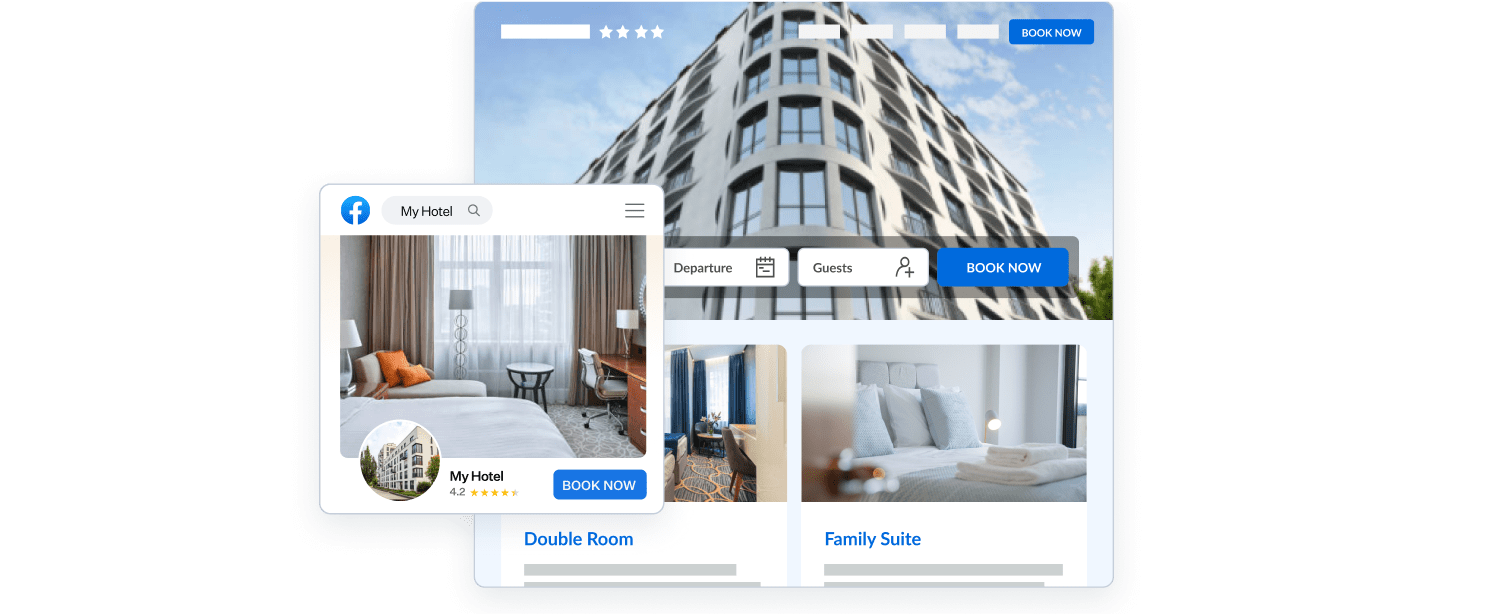
Placing exclusive promotions within your booking engine on your website will give travellers an incentive to book directly instead of via an OTA. It will also help establish your hotel website as your most important distribution channel and help increase profit by eliminating OTA commission fees.
The incentive might be a discount, or it might also be an added extra such as a bottle of wine, restaurant voucher, or amenity gift cards.
5. Partnership promotions
Combining with other businesses will reduce the cost of promotion and marketing, and give you wider coverage, as long as your partner holds up their end of the bargain. It may also give you access to a new market and create ongoing business.
Common partnerships include those with theme parks, restaurants, cinemas, museums, sporting arenas, adventure, and tour guides.
It’s one thing to create your promotions, but remember you need people to see them. Always advertise on your social media channels and ensure your search engine optimisation is strong
6. Mobile-only promotions
Year-on-year, nearly every statistic points to an upsurge of mobile usage on hotel, travel, and booking websites, with projected numbers even more prominent.
As quick as online booking overtook more traditional and outdated methods, mobile is starting to usurp desktop. Implementing smart and effective mobile strategies will boost customer experience and keep your hotel competitive within an industry that never stops innovating.
First things first, you’ll need a mobile-optimised website which will attract traffic and remain as user-friendly as a desktop browser. Secondly, your booking engine requires the capability to run promotions with restricted rates to mobile-only, while keeping a painless two-step booking process.
Key takeways:
- Seasonal, event-based, and themed promotions capture existing search demand when travellers are already looking for these experiences
- Mobile-only and direct-booking offers with added extras eliminate OTA commissions while capturing the growing mobile booking market
- Partnership bundles with local attractions reduce marketing costs while accessing new customer segments and creating standout value
What are packaged hotel room sales ideas?
Hotel packages are a staple of any marketing and hotel sales strategy, and also something guests will expect to have offered to them.
The impact these packages have on driving extra bookings or boosting revenue will depend on three key factors:
- What you sell
- How you sell it
- When you sell it
Guests won’t purchase a package just because you tell them it’s a great deal. You need to offer them value for money and something that will excite or interest them personally.
Packages can apply to both leisure and business travellers as a pleasure and convenience respectively, and your hotel can only benefit from selling packages as guests who purchase packages are less likely to cancel their booking.
Ideally you want a package that will please every guest but at the same time, if you have too many it will dilute the impact. Three great packages are better than 10 mediocre ones.
Here are five tips when creating your hotel packages:
1. Use other businesses to enrich your packages
Combining your services with that of another tourist attraction in the area is a surefire way to add value to your packages. It also gives you a lot of flexibility on what you can offer guests. Tickets to zoos, tours, theme parks, museums are always popular as are restaurant vouchers.
Even concerts or one-off events can be leveraged as short-term packages. This way you can cater for many different guests, those interested in adventure and those more excited by shopping or fine dining.
2. Promote one-stop shopping
Savvy travellers will look at your packages and wonder exactly what kind of deal they’re getting. Unless you and your business partner agree to offer discounted prices, it’s likely the combined price of a room and a tour package will be similar to the components purchased separately.
This is why you need to advertise the convenience and quality of what you’re offering, rather than spiking the cost.
3. Be creative with your choices
Guests might become rather bored if they see yet another ‘romance’ package. Try incorporating more interesting content into your packages and their names.
For instance, a ‘bucket list’ package might include a selection of passes or discounts to the absolute must-sees of the local area. This will be an attractive option for guests because it’s likely they are already interested in visiting those landmarks.
For business travellers, always focus on convenience such as a package delivering breakfast to their room, free dry cleaning, and transport services.
4. Use your own property to add value
While most packages include a room and some type of external activity, you can make your packages even more enticing by adding your own service to the mix such as spa-treatments or a bar tab.
Guests will want to experience your amenities and they’ll be more likely to pay to do so if it’s included in a package.
5. Cater for specialty markets
Never ignore families. Often it’s the children you’re appealing to most because parents will be looking for activities that will occupy the kids. The same principle applies if you’re a pet-friendly hotel.
You must also consider guests with disabilities and people with specific occupations that you can give personalised packages to.
Don’t forget to promote any new packages you create, be they long-term or one-off. Use Facebook, Twitter, Instagram, and your email to drum up business. Send any information along to your local tourism office so they can do the same.
Another thing to consider is what you want to achieve with your packages. Sometimes they can create a lot of brand awareness, even if they don’t attract much business directly. For example, I read about this strange offer from a hotel in California.
To the average traveller, you and your competitors will often appear very similar. That’s why you need to present an offer that tips the balance and convinces an undecided traveller that yours is the best hotel for them. Package deals and extras are an easy, but extremely effective way of doing this, providing you take the right approach.
Key takeways:
- Value-driven packages attract bookings: Hotels bundling rooms with local attractions (zoo tickets, tours) or in-house perks (spa treatments, bar tabs) see reduced cancellations as guests perceive greater value beyond price alone
- Three targeted packages outperform ten generic ones: Properties focusing on distinct segments – leisure seekers, business travellers, and families – achieve better conversion than those offering numerous similar deals
- Multi-channel promotion drives package uptake: Hotels distributing package information across social media, email, and local tourism offices reach undecided travellers at multiple decision points
What is a hotel sales action plan?
A successful sales strategy starts with effective distribution. To maximise bookings, hotel operators need to build strong networks with key industry players. These include retail travel agents, visitor information centres, local businesses, online travel agents (OTAs) and destination marketing organisations.
However, distribution isn’t something you set and forget. It is a dynamic process that requires regular attention. Guest preferences, booking habits and market conditions change constantly, so hoteliers must stay proactive and look for new opportunities to reach guests through trusted partners and emerging channels.
Equally important is your ability to manage room availability across all distribution partners in real time. This is where a channel manager becomes essential. By connecting your property management system to every booking channel, a channel manager helps keep accurate availability and pricing everywhere your rooms are sold. This reduces the risk of double bookings, helps capture last-minute reservations, and allows you to maximise occupancy at every opportunity.
Hotel sales training
Hotel sales training gives your staff the skills to turn enquiries into bookings and first-time guests into loyal guests. An investment in hotel sales training is one of the best you can make, as it directly impacts your ability to secure bookings and generate revenue. It teaches your team how to handle objections and build relationships. It ensures they understand guest motivations and can communicate why your hotel is the right choice.
An effective distribution strategy plays a critical role within your broader hotel sales funnel. It ensures that when potential guests reach the action stage, your rooms are ready and easy to book. To make this process even more efficient and drive more direct bookings, hotel sales funnel software can help streamline guest journeys and boost conversions.
What are hotel sales tools?
Your hotel sales tools include anything that enables you to bring a guest into your hotel. This might mean your social media accounts, your email marketing campaigns, the phone on your front desk, guest feedback, or back-end hotel technology solutions.
Though when you think of tools as objects or functional pieces of software you might consider these to help inform your sales strategy:
- Social networks
- Analytics tools such as Google
- Survey tools
- Online travel agents
- Property management tools
- Booking engines
- Channel managers
- Website builders
- Dynamic Pricing tools
Identifying and using the right tools will depend on your property and the guests you want to attract but for the most part all properties need the same tools. The difference comes in how you use them.
Data is extremely important so using tools that can give you detailed reporting functions is a great step to take. With enough data at your disposal, you can make informed decisions about how you sell, gaining an edge over any competitors who are following a ‘cookie-cutter’ approach.
Obviously you need to be smart about how you use the budget at your hotel and look for tools which will make life easier while helping deliver more revenue to the business.
Hotel sales software
When you think of sales software in a hotel context, it’s better to think of distribution software. Three key pieces of technology that could help you are a channel manager, online booking engine, and website builder.
While they may not be strictly thought of as sales software, they are the key to driving sales and revenue in the hotel industry.
1. Channel manager
This is one of your greatest allies when distributing your rooms because it’s a tool that manages all the different online travel agents (OTAs) you sell your rooms through, such as Booking.com, Expedia or Airbnb.
The main operating principle is called “pooled inventory” which means updates to rates and availability are made automatically across all connected channels whenever and wherever a booking is made.
Enabling a more effective way to promote your rooms will naturally create an increase in sales. Read our guide on channel managers to learn more.
2. Booking engine
An online booking engine has become essential, especially with the rise of social media. Creating a friction-less experience for guests when they book directly will boost your conversion and improve your sales results. Read our guide on booking engines to learn more.
3. Website builder
This takes away the need for you to hire a web designer. Instead you can use this software to create a beautiful, search engine optimised, guest converting website in minutes.
You simply have to provide your content and choose from a number of available templates. Your website is a major selling point for travellers – winning them over with an amazing first impression is imperative.
With the right technology in place, you will be able to easily and effectively implement your hotel room sales strategies. To learn more about these hotel sales tools and to find out if they are the right choice for your hotel property, check out how they work in a video demo.
What are the advantages of hotel sales strategies?
An effective hotel sales strategy ensures that you generate more revenue throughout the year, improve your property, and have the chance to expand your offerings. When you sell hotel rooms, you do more than just get another guest in the door of your property. You are able to improve your hotel business in its entirety.
Here are a few of the benefits that you will realise when you employ hotel room sales strategies that are designed to increase hotel room sales:
Generate more revenue consistently throughout the year
An effective hotel sales strategy allows you to earn as much revenue as possible, regardless of the seasonal ebbs and flows of the tourism industry.
Make improvements to your property
As you begin to earn more revenue from your bookings, you can make improvements that will generate buzz about your brand and continue to sell more rooms.
Move beyond standard sales strategies
Once your sales steadily increase, you can begin to expand your offerings. Romance packages, adventure packages and luxury upgrades allow you to sell more rooms while also boosting the revenue you earn per booking.
Frequently asked questions about hotel sales
How much should a hotel spend on sales and marketing?
The numbers vary a lot. On average US hotels spend just 2.5% of room revenue on marketing, but the most successful hotels are often closer to 10% (though this varies by size, market and seasonality). You have to spend money to make money, but it’s a balance: you need to invest enough to maintain your visibility, drive bookings and outpace local competitors, without excessively eroding your current margins.
How long does it take to see results from hotel sales strategies?
Some tactics, like targeted ads or OTA optimisation, deliver quick wins within days or weeks. Others strategies – SEO, content creation, destination marketing and business partnerships – take months, but can generate more sustainable long-term growth.
What’s the difference between hotel sales and hotel revenue management?
Hotel sales strategies focus on generating demand through marketing, relationship-building and conversion. Revenue management strategies set pricing and handle room inventory in a way that maximises bookings, revenue and profit.
Which hotel sales strategy generates the highest ROI?
Direct booking strategies can deliver a particularly strong return, because they allow you to reclaim the sky-high commission fees that are charged by intermediaries like OTAs, while also helping you to establish a deeper connection with your guests by granting you more control over the reservation process.
What are the biggest hotel sales mistakes to avoid?
Common hotel sales pitfalls include slow response times, inconsistent follow-up and unclear value propositions. A hotel can also lose out on revenue if it relies too heavily on OTAs, underinvests in staff training, or makes the booking journey unnecessarily complicated.