What is a hotel reservation system?
A hotel reservation system, also called a hotel booking system or booking management system, is the software that holds a hotel’s booking records and manages its rates and availability across every channel it sells on, from its own website to OTAs like Booking.com. Platforms like SiteMinder, which generates more than 140 million hotel bookings a year, keep that inventory synced in real time so every channel shows the same live availability.
Hotel reservation systems work behind the scenes, while the guest-facing booking engine, also called hotel booking software, is where guests select dates, choose rooms and complete their booking on your website. Hotel groups managing multiple properties often add a dedicated central reservation system (CRS) to centralise reservations across their portfolio.
Advanced systems also enable guests to add extras like room amenities or special services during the booking process. Whether your accommodation is a 5-star hotel, a bed and breakfast or a holiday home for lease, there’s a single, unifying fact: if you’re not online, you’re missing bookings. Today’s digital world means just about everyone who travels for work or pleasure is online.
Table of contents
Why is using a hotel reservation system important?
Hotel reservation systems are essential because they enable 24/7 direct bookings without staff oversight, helping hotels capture revenue around the clock while reducing dependency on commission-paying third-party channels. These systems prevent overbooking through real-time inventory updates, enhance guest experience with instant booking capabilities, and provide valuable data insights into guest behaviour and preferences. Additionally, they contribute to operational sustainability by reducing paper waste and administrative costs.
In today’s competitive hospitality landscape, being discoverable online isn’t enough. You need systems that actively convert visitors into confirmed bookings. A reservation system transforms how guests interact with your property from their first search through checkout, making your business more competitive and responsive to what guests want.
Increase revenue with a reservation system See how you can use SiteMinder's smart platform to streamline and power up your reservation management.
What are the different types of hotel reservation systems?
There are different types of reservation systems in the hospitality industry, primarily based on property type, hotel preferences, and business needs. Any kind of hotel booking reservation system should easily integrate with the accommodation provider’s existing technology infrastructure.
Generally, there are three major types of hotel booking reservation systems:
On-premise reservation system
Formally called locally-hosted systems or sometimes referred to as a computerised reservation system, this type of software is installed in computers at the property and runs on the hotel’s own servers, where they won’t need the internet to work and have complete control over their data and security but can be difficult to set up and expensive to maintain.
Online hotel reservation system
Often known as cloud based hotel reservation system or web based hotel reservation system, this type of software is securely hosted in remote servers and can be accessed by authorised people online which means that users from different locations can manage real-time reservations on any device such as desktop, laptop, and iPad or tablet with internet connection.
Online hotel booking software
Often embedded on your website or app, this guest-facing front end lets travellers search with filters for dates, room types and amenities, view live prices and promotions, pay through a secure gateway, and receive instant confirmation emails or vouchers on desktop, laptop or tablet.
Unlike an online hotel reservation system, which is the back-end engine that manages inventory, rates and multi-channel distribution, the booking software owns the customer experience and conversion, then passes each confirmed booking to the reservation system so availability and pricing updates in real time across direct and third-party channels.
Note: While some providers bundle booking software with their reservation systems, many hotels use separate best-of-breed solutions for each function, integrating them through APIs.
Understanding how these core technologies interact is essential for building a modern and efficient tech stack. A property management system handles day-to-day operations, while your reservation system will rely on a booking engine and a channel management tool that sync with each other in real time. Connecting up these pieces of software reduces work and errors, and ultimately earns you more bookings and makes you more money. Here’s how they interact, specifically within SiteMinder:
| Tool | What it does | Where it sits | SiteMinder |
|---|---|---|---|
| Reservation system | Holds the booking record and manages rates and availability across channels | The back-end engine | Delivered through SiteMinder’s platform, which also integrates with standalone CRS platforms |
| PMS | Runs day-to-day operations — front desk, housekeeping, folios, check-in/out | On-property core | Integrates with SiteMinder (SiteMinder isn’t a full PMS) |
| Booking engine | Converts website visitors into direct, commission-free bookings | Guest-facing front end | SiteMinder booking engine |
| Channel manager | Distributes rates and availability to OTAs and the GDS in real time | Distribution layer | SiteMinder channel manager (500+ channels) |
All but the smallest independent hotels typically operate all four components simultaneously. SiteMinder provides the reservation, booking engine and channel management layers within a single platform that connects directly to your PMS so your stack stays in sync.
Key takeaways
- Hotel reservation systems are available in on-premise or cloud-based/software as a service (SaaS) platforms.
- Cloud reservation platforms are more capable, connecting back-end inventory management with property management systems and distribution channels.
- Integrating PMS, booking engine and channel management tools optimises operational efficiency and revenue.
What are the benefits of having reservation systems for hotels?
One of the major benefits of a hotel reservation system software is that it is the helping hand you need to keep your occupancy up, even during the slow times and make sure everything is running smoothly.
There’s a range of benefits to having this technology in place at your hotel, mostly based around simplifying your life as a manager or staff member and speeding up a number of processes.
Key industry drivers for reservation systems:
- Direct bookings consistently rank among the top three revenue-generating channels in 90% of the 20 markets SiteMinder analyses, and their revenue share held within 1.5 percentage points year-on-year in 95% of markets, even as AI and OTAs reshape how travellers research.
- Online travel agencies (OTAs) are the most popular place for travellers to begin their search for a hotel, but 18% of travellers who start their research on an OTA will go on to book through a hotel’s website – and that number is growing year on year.
- Not only do direct bookings allow a hotel to avoid OTA commission fees, reservations made through hotel websites also generate the highest average booking value: US$516 in 2025, far exceeding the US$312 generated by OTA bookings.
Here are 13 benefits of implementing a hotel reservation system:
1. Streamlined administrative tasks
Rather than requiring you to respond to email inquiries and accept reservations over the phone, a hotel reservation software system does the work for you. Instead of being stuck completing your administrative duties in the office, you can then spend more time interacting with your guests.
You can also keep the rest of the staff more organised and efficient, because everyone will have access to live information about the current occupancy at the hotel. It is the easiest way to increase productivity when you manage a hotel or any other type of accommodation.
2. Reduced risk of double or over bookings
Without a hotel reservation system, someone within the hotel operations team has to manually update the availability on every listing whenever a hotel receives a new booking – and given the fact that most hotels run rather diverse distribution networks, this is no quick or easy task. In fact, it can be one riddled with errors, while the lag time between the booking being received and the dates being blocked can allow double bookings to slip through.
A hotel reservation system avoids these issues through the use of a single, pooled inventory. When a guest reserves a room through an online travel agency or your direct website, a tool like SiteMinder instantly updates your central inventory and adjusts availability across every other channel simultaneously (and, with Dynamic Revenue Plus, adjusts rates as demand shifts). This automated sync ensures room rates stay optimised while freeing front-desk staff from tedious administrative updates.
3. Improved guest experience
With an online hotel reservation system, guests can book their preferred room type on their computers, from their tablets or on their phones. They can also complete the transaction quickly, efficiently from the comfort of their own office or living room.
With short forms and secure payment portals, your hotel reservation software makes the process of online booking a room simple, easy and enjoyable. Remember, this is their first impression of your hotel and it will have a lasting impact on their perception of your brand. It should be user-friendly if your guests will complete the process and book online.
4. Less work for the front office
When guests input their own reservation details through the system, everything happens automatically. As guests book their own stays, the reservation simply pops into your system with all details intact and your staff don’t need to worry.
There’s no need for the front desk staff to process reservations—all they have to do is get ready for the guests’ arrival when the time comes, which also gives your reception staff more time to tend to their other tasks.
5. Decreased chances of losing or messing up reservations
With guests putting in their own details, there’s less chance of the wrong data being entered. Human fallibility is a far less significant factor when they input the dates and specifications themselves.
That way, if something goes wrong, you’ll have a record to prove it’s no fault of your business. You can still provide them with a solution, but your reputation is protected.
6. Easily gathered data
Data collection is absolutely critical, especially in the hotel industry where guests are demanding a more personalised experience. A hotel room reservation management system captures a huge amount of valuable guest data and compiles it into comprehensive reports that allow you to utilise it more effectively.
Without a hotel reservation system, it’s hard to know how many guests are travelling, what their interests are, what amenities they prefer, how old they are, where they’re coming from, why they’re visiting your destination, and so forth.
That’s very useful for you to know and will help you improve both customer service and hotel marketing, tailoring your campaigns to attract the most motivated guests to your hotel brand.
7. Simpler administration of rewards
Guest loyalty programs work and you could be leaving a lot of money on the table if you’re not using them. A good hotel reservation information system empowers you to keep track of customer stays and reward them accordingly, keeping them around for the long haul. Gain better management and monitoring of rewarding guests for their loyalty.
8. Round the clock bookings
Potential guests don’t only want to reserve a stay during business hours. In fact, they are far more likely to surf your site and think about a weekend away or a holiday while they are at home at night so by having a ‘book it now’ button on your website, anyone can book a stay with you any time of the day or night.
9. User-friendly
Enabling a customer to book a stay with you online through a user-friendly system is something consumers have come to expect.
Time-poor people today don’t want the hassle of phoning properties and leaving messages.
Online bookings are fast, easy and secure – for you and your customer. If you don’t offer a booking button on your website, customers will jump to another property’s site that does.
10. Saves you money
Offering online bookings 24/7 is like employing a night-shift reservations clerk but without the cost of paying for an after-hours employee, saving you money.
11. Save you time
Instead of processing bookings manually, an automated, online booking system will do all the hard work for you, with the system generating automatic booking confirmations, updating your availability and procuring guest information – without you having to do anything.
And because you don’t have to spend time during the day taking bookings on the phone, you can spend more time on all the things you wished you had more time to do in your business.
12. No commissions
Selling rooms directly through its own website allows a hotel to capture maximum profit on every reservation. Third-party online travel agencies (OTAs) typically charge commission fees of 15-25% of the total booking value, significantly eroding revenue.
By integrating SiteMinder’s direct booking engine, hoteliers retain the full booking value, minus standard payment processing costs – a far better option than surrendering a significant share of it to a third party. Direct reservations also give properties full ownership of guest contact details and the booking process, creating opportunities to build long-term brand loyalty, offer personalised upgrades, and drive profitable repeat bookings.
13. Turning lookers into bookers
In an age where consumers are used to instant gratification and the ability to make decisions while on the go, it’s instrumental to any business to be as discoverable as possible. And the last thing you want is for a potential guest to click away because the process of making a booking is too difficult.
The whole idea, of course, is to convert traffic to your website – your most valuable sales channel of all – into confirmed bookings so it’s important your website’s bookings page looks appealing and easy to use.
And it’s a good idea for your booking engine to also be able to package rooms to include extras such as breakfast, late checkout and tours to provide a value-add to every room sale.
Learn more by checking out SiteMinder’s own commission-free hotel booking engine.
Key takeaways
- Automation eliminates manual work: From email responses to reservation processing, a modern system handles bookings 24/7 while reducing errors and overbookings through real-time inventory sync.
- Direct bookings save money: Bypass OTA commissions by enabling guests to book directly through your user-friendly website, keeping more revenue while controlling the guest experience.
- Data drives personalization and loyalty: Capture guest preferences, track stay history, and manage rewards programs to build relationships that increase repeat bookings and lifetime value.
Maximise direct bookings from your website
SiteMinder integrates with leading hotel booking engines to keep your rates and inventory up-to-date in real-time, delivering commission-free direct bookings straight to your PMS.
Learn More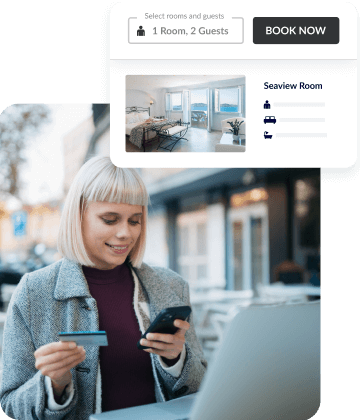
What are the most important features of hotel reservation management systems?
A hotel reservation system does more than just allow you to accept and manage bookings through your hotel website. Reservation systems offer a variety of features that enable you to streamline your tasks and automate your processes as well. There are a number of basic features every online hotel reservation management system should have such as:
Functional features of a hotel reservation system:
- Associate every online booking with an account
- Limit every account to a single user
- Enable users to search and find the most relevant booking options
- Accept date and time to check available rooms for that particular time
- Booking confirmation should be sent to the specified contact details
- Calculate and display accommodation charges and other utilities
- Cancel bookings
- Display and change records of guests
- Change rooms
Non-functional features of a hotel reservation system:
- Use encryption to avoid bots from booking
- Search results should populate within acceptable time limits
- Users should be helped appropriately to fill in the mandatory fields, in case of invalid input
- System should accept payments via various payment methods
- Easy to use, efficient, and accessible
- Keep track of documentation, activities, and responses
The main point to remember is that this technology enables guests to choose and book their own rooms online via a secure portal. It must be straightforward and safe, but it must also offer you the same convenience and range of use it does your guests. This way, it won’t only make life easier but you can use the data it provides to source more revenue and profit for your hotel.
How do hotel reservation systems work?
Hotel reservation systems work by allowing guests to reserve dates for their stay based on real-time display of rates and inventory across all booking channels, then finalize their reservation through an online payment portal. After completing their transaction, the system automatically updates your property management system (PMS) and, with the help of a channel manager, all your hotel listings on reservation websites get updated as well.
Below is a simple step-by-step process of how a hotel reservation system works:
Step 1: Guests input head count and stay dates
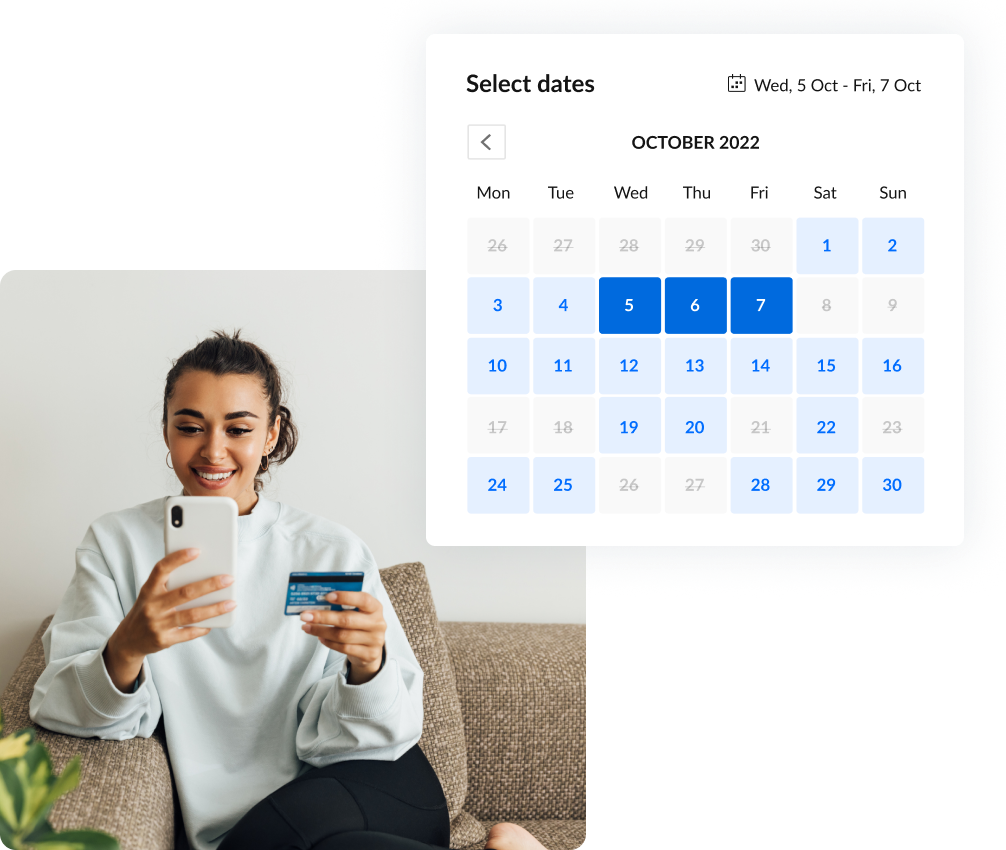
A potential guest inputs a specific number of people and their planned check-in and check-out dates in the calendar of the system.
Step 2: System checks room availability
The system validates the availability of the hotel’s different room types and your indicated travel dates, then displays the available rates at the time of the search.
Step 3: Guests complete their booking
The guest reserves their desired room through the online hotel booking software by providing their personal information such as name, contact number, and payment details. They can also add special requests such as a room with a view or a specific location, and the system will notify the hotel of these requests.
Step 4: System confirms and updates other software
The system confirms the booking and automatically updates room inventory in the hotel’s PMS. It also generates a confirmation number which can be automatically sent to the guest via email.
Key takeaways
- Essential features include both functional and non-functional elements: Systems must handle account management, booking searches, confirmations, and cancellations while providing encryption, bot protection, and multiple payment methods for security and usability.
- The booking process follows four automated steps: Guests input dates and party size, the system displays real-time availability, processes payment and special requests, then automatically updates your PMS and all connected channels.
- Dual benefit for guests and hoteliers: The technology must be straightforward and secure for guests to book online while providing hotels with data and automation to drive revenue and operational efficiency.
How does hotel booking software work?
Hotel booking software sits at the front end of the guest journey. Beyond the research and comparison phases, it’s where the real customer experience begins. From browsing and room selection through to payment and confirmation, it is designed to maximise conversions. Once a booking is confirmed, the software passes the details to the hotel’s reservation system.
Here’s a basic rundown of how hotel booking software works:
1. Guest search and selection
The guest enters their dates, number of guests and preferences on the hotel website or booking platform. The hotel booking software presents available room types, rates and inclusions in a way that is designed to encourage the potential customer to make a selection. Visuals, descriptions and upsell options all play a role at this stage.
2. Pricing, rules and availability check
Behind the scenes, the hotel booking software checks live availability, rates and booking rules (e.g. minimum stays, cancellation policies). This information is typically pulled from the reservation system or channel manager in real time. If inventory or pricing changes, the results update instantly on the guest’s end.
3. Payment and confirmation
Once the guest has selected their dates, rooms and any packages, upgrades or ancillary services, the hotel booking software captures personal details and processes payment through a secure payment gateway. It validates the booking against availability and rate rules, then confirms the reservation with the guest. The guest then typically receives both an on-screen confirmation and automated email confirmation.
4. Reservation system update and distribution
The confirmed booking is sent to the reservation system, where it becomes a live reservation and automatically updates inventory across all channels to prevent overbookings and ensure all tools stay perfectly in sync.

Mirja Wolf,
Manager
Hotel Kragemann
Who needs a hotel reservation system?
Every type of accommodation provider that sells rooms online can benefit from a central hotel reservation system to manage inventory, set pricing and capture bookings. From small B&Bs to global hotel chains, a central system prevents overbookings, automates rate distribution across channels, and protects direct booking margins, regardless of property size or operational complexity.
Here’s how reservation technology supports different property types:
- B&Bs and guesthouses: Small, independent operators want simple, intuitive management tools to provide administrative relief by handling front-desk tasks and direct bookings. Look for solutions with an easy-to-use mobile app, a simple calendar, and an all-in-one platform built for properties with up to 20 rooms, such as Little Hotelier.
- Boutique hotels: Small, independent, design-led properties will want a flexible booking engine to showcase unique room categories, personalised add-ons and curated experiences: one capable of driving high-margin direct bookings while seamlessly syncing live rates across specialised niche OTAs and global channels. SiteMinder’s booking engine supports packages and add-ons for exactly this kind of offer.
- Independent hotels: Mid-sized independent properties may need enterprise-level distribution power to compete with major chains – but without incurring enterprise-level IT costs. A tool like SiteMinder provides independent hoteliers with a powerful central reservation layer that connects directly to their choice of PMS to automate rate management and inventory updates.
- Hotel groups and chains: Multi-property brands require centralised control, enterprise-level reporting and distribution at a global scale. The best solutions, like SiteMinder, will integrate with all the leading enterprise PMS platforms and global distribution systems (GDS), enabling hotel groups to manage complex yield strategies and high-volume reservations in real time.
How do you choose the right hotel booking software?
Not every hotel booking software is created equal. What works for a small B&B may struggle to manage a larger hotel’s needs, while enterprise-grade platforms could be unnecessarily complex or expensive for smaller operators. However, certain factors should guide every hotel’s decision, regardless of size or budget.
Here are the most important considerations when choosing a booking software system:
Easy-to-use system
An intuitive and user-friendly interface is essential. Your staff should be able to navigate the system without extensive training – or if training is required, the software provider should have an excellent onboarding programme. Look for a system that offers a clean design and logical flow, making daily tasks a breeze.
Integrates with existing management system
Your new reservation system should seamlessly integrate with your existing management tools. This ensures a smooth transition and allows for real-time updates across all platforms, reducing manual errors and saving time.
Mobile compatibility
Mobile compatibility is a must. Ensure that the system is accessible and fully functional on various mobile devices. This allows guests to make reservations on the go and staff to manage bookings from anywhere.
Channel management
Effective channel management allows you to distribute your rooms across various online platforms without overbooking. Look for a system that offers real-time updates and centralised control, ensuring that your inventory is always accurate.
Secure payment gateway
Security is paramount to ensure guest confidence and risk management. Choose a system that offers robust payment gateways, adhering to the latest security standards. This not only protects your revenue but also builds trust with your guests.
Guest management
A system that offers comprehensive guest management features can enhance the guest experience. From personalised greetings to special requests, having these details at your fingertips makes for a memorable stay.
Scalability
As your hotel grows, your system should grow with you. Look for a scalable solution that can adapt to your changing needs without requiring a complete overhaul. Is the software you’re looking at right for your future – or just for right now?
Good reviews
Research what other hoteliers are saying about the system. Good reviews from peers can provide valuable insights into the system’s reliability, customer support, and overall performance.
Trial period
Many providers offer a trial period, allowing you to test the system before committing. Take advantage of this to ensure that the system meets all your specific needs and expectations. Be wary of providers that only offer a short trial period – there’s only so much you can learn about the software’s capabilities in seven days, after all.
Key takeaways
- Prioritise usability and integration: Choose systems with intuitive interfaces that seamlessly connect with your existing PMS and management tools to reduce training time and manual errors.
- Essential features include mobile compatibility, channel management, and security: Ensure the system works on all devices, prevents overbooking through real-time updates, and protects guest data with robust payment gateways.
- Validate through reviews and trials: Research feedback from similar properties, take advantage of trial periods to test the system thoroughly, and ensure the solution can scale with your future growth.
What are the best hotel reservation systems in 2026?
The best reservation system depends on your property’s size and how much distribution reach you need:
SiteMinder
Best for distribution and direct bookings
Hoteliers voted SiteMinder the #1 booking engine in the 2026 HotelTechAwards. Its platform connects reservations, direct bookings and distribution to 500+ channels in one place, and integrates with the PMS you already use. Start your 14-day free trial today.
Little Hotelier
Best for small properties and B&Bs
Specifically designed for small accommodation providers, Little Hotelier is the best pick for a simple hotel reservation system and hotel booking software. Easily manage your bed and breakfast or boutique hotel reservations and more, all from a single platform. Its small hotel reservation system has a user-friendly interface, making it easy for non-technical staff to use.
Hotel App Store
If you’re looking for more options to suit your hotel reservation needs, the Hotel App Store is a curated marketplace of apps that integrate with SiteMinder. Filter by what you’re aiming for, such as making more money per booking or getting more guests to book directly.
Frequently asked questions about hotel reservation systems
Is a reservation system the same as a booking management system or CRS?
Largely, yes. “Hotel reservation system” and “booking management system” are used interchangeably. A central reservation system (CRS) does the same core job, but is typically built for hotel groups that need to centralise reservations across multiple properties. SiteMinder’s platform delivers CRS functions for independent hotels and integrates with leading standalone CRS platforms.
What’s the difference between a hotel reservation system and a PMS?
A property management system (PMS) manages a hotel’s daily operations, including room assignments, check-ins, housekeeping and guest folios. A hotel reservation system, meanwhile, controls all things booking, including distribution, room availability, pricing strategy and channel management.
Do I still need a reservation system if I already sell on OTAs?
Yes. Relying on individual OTA portals like Booking.com’s Extranet and Expedia Partner Central forces staff to update rates and availability manually on every platform, risking human error and overbooking. A platform like SiteMinder syncs rates and availability across all your listings instantly and automatically, while also empowering you to capture commission-free direct bookings on your own website.
Is a hotel booking software the same as a channel manager?
No. Hotel booking software focuses on converting direct guests through your website, while a channel manager distributes rates and availability to third-party channels like OTAs. The two have the same aim (securing bookings) and often work together, but they serve different roles in the booking ecosystem.
What software do hotels use for booking?
Most hotels use a combination of a booking engine, a reservation system and a channel manager. These tools are often bundled into an integrated platform like SiteMinder, so data flows seamlessly between direct and third-party channels.
How much does hotel booking software cost?
Costs vary depending on hotel size, features and whether tools are purchased separately or as a platform. Solutions like SiteMinder are designed to be cost-effective for hoteliers by combining distribution, direct booking and integrations into a single cost-effective and scalable subscription.
Is a hotel booking software cloud-based?
Yes, modern hotel booking software is typically cloud-based, granting access from anywhere with an internet connection. Cloud platforms like SiteMinder reduce IT overheads, update automatically and make it easier to connect with other hotel systems.